From Open Wheels to Covered Cockpits: Why Racing Cars Look Different
Why racing cars look different comes into focus through their history, rules and construction, helping you distinguish open-wheel cars from enclosed racers.
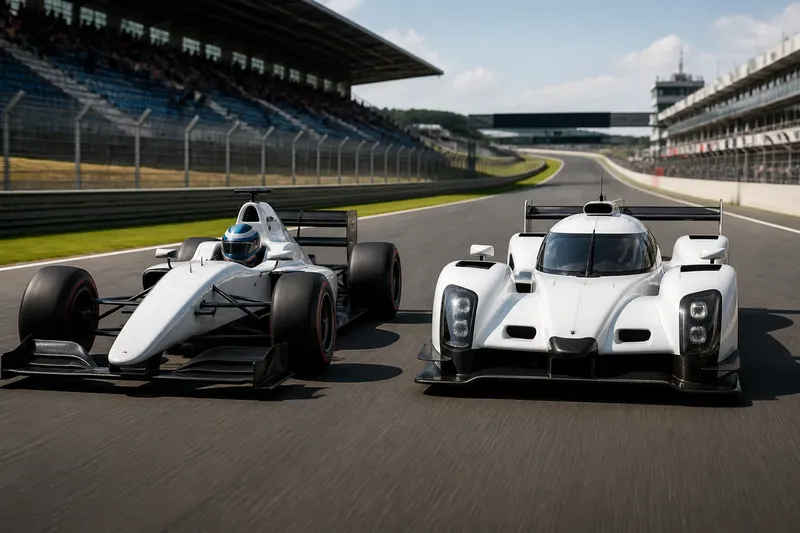
At a circuit, a single-seater and an endurance prototype pass the grandstand with strikingly different outlines. Why racing cars look different has a history: changing competition rules and engineering choices shaped open-wheel machines and enclosed racers into distinct kinds of car.
Early racing did not begin with one standard shape
Motor racing developed across different events, manufacturers and rule systems, rather than from a single design template. Some early competitors resembled road cars, while others had more exposed wheels. The body style depended on the kind of event and the machines entered, so open wheels were never the sole starting point for racing design.
As organised categories established their own rules, those rules helped separate one form of competition from another. A series could specify the car’s dimensions, bodywork or relationship to production models. Over time, repeated rules and engineering choices gave categories recognisable shapes, even as the details continued to change.
Open-wheel cars keep each tyre outside the body
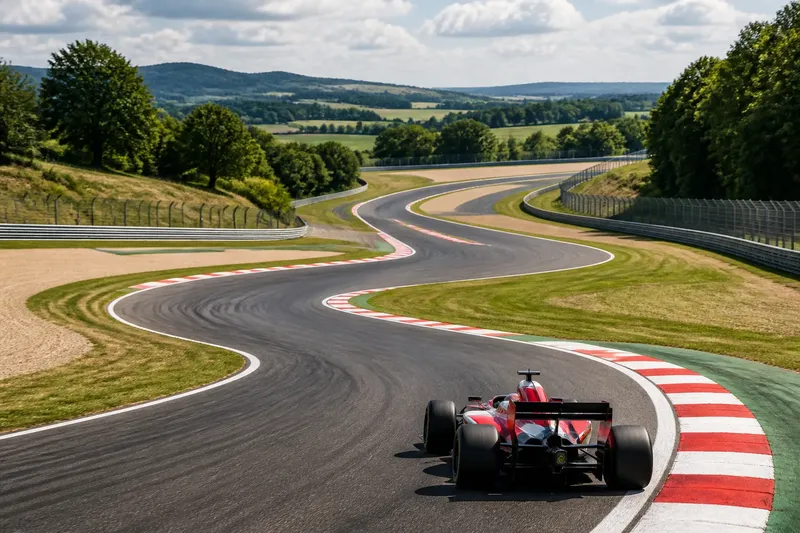
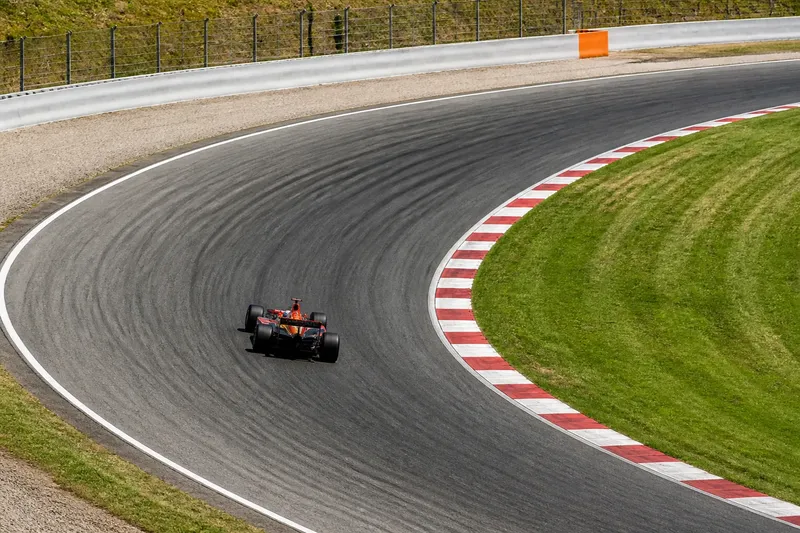
In an open-wheel car, the tyres sit beyond the main body instead of beneath enclosing arches. The driver occupies a narrow central cockpit, with suspension parts and aerodynamic surfaces visible around it. Formula racing is the best-known home for this layout, though the rules and designs differ between series.
Because the tyres are exposed, the car’s outer width includes the wheels themselves. Designers must manage airflow around them and account for their exposure to debris or contact. Wings and the floor help shape airflow and produce downforce, the force that presses the tyres towards the track; their permitted form depends on the series rules.
Enclosed racers use bodywork to shape the whole outline
Touring cars, sports cars and endurance prototypes cover their wheels with bodywork. A touring car may retain a recognisable roof and door layout, while a purpose-built prototype can have a low roofline and a highly sculpted shell. Both are enclosed-body racers, but the category and design brief determine how closely either resembles a road car.
The panels do more than cover mechanical parts. Their shape and openings help direct air, provide space for cooling and form the car’s exterior around the cockpit. A roof, doors or familiar profile can suggest a connection to a road model, but they do not prove how much of the racing car is shared with one.
Rules and purpose explain more than appearance alone
Regulations define what designers may build. Depending on the series, rules can govern dimensions, aerodynamic devices, cockpit protection, access and the use of production-based components. A viewer can recognise broad design choices from the outside, but the rulebook is needed to establish a car’s formal requirements.
Neither layout is automatically faster, safer or more advanced. Each presents different design constraints: open-wheel cars expose their tyres, while enclosed cars must arrange bodywork around the wheels and cockpit. A plain analogy is a work apron and a raincoat: each covers a person differently because it serves a different purpose, but the garment alone does not tell you how well the wearer can work.
What do the main design clues tell you?
- If the tyres sit wholly outside the body, identify the car as open-wheel; if arches cover them, look for an enclosed-body category instead.
- If the driver sits in a narrow, exposed cockpit, treat that as a clue to a single-seater layout; if a roof and side windows enclose the cockpit, consider a sports car, touring car or prototype.
- If the car has a familiar road-car roof and door shape, consider whether it belongs to a production-based category; if not, check the series rather than assuming it is road-derived.
- If prominent wings and a shaped floor are visible, note their aerodynamic role; if their purpose or legality is unclear, consult the category rules rather than inferring performance from size.
- If cooling openings are visible in the body, note where the design admits air; if the opening’s function is uncertain, avoid treating its position alone as proof of a specific mechanical layout.
- If a car has enclosed wheels but a purpose-built, low shell, consider an endurance prototype; if its category remains uncertain, use its event entry or series identification to decide.
How can you identify the design without guessing?
Did early racing cars all have open wheels?
No. Early competition included cars with road-car-like bodies as well as machines with more exposed wheels. The shape varied with the event and its rules.
Why do some racing cars resemble road cars?
Some categories require or encourage production-based designs, so their racers retain features such as a roof, doors or a familiar profile. Other enclosed racers are purpose-built and may share little with road cars beyond a covered cockpit.
Why do open-wheel cars have wings?
Wings direct airflow and can help create downforce. Their design and permitted use depend on the rules for the particular series.
Does an enclosed cockpit mean a car is safer?
Not by itself. Safety depends on the complete car, including its structure, materials, restraints and the rules it must meet; a roof alone does not allow a sound comparison.
A close comparison separates visible clues from assumptions
Imagine you are standing beside a Formula-style single-seater and an endurance prototype in a paddock. You see exposed tyres and a narrow cockpit on the first, then enclosed wheels, a roof and cooling openings on the second. You classify the first as open-wheel and the second as an enclosed prototype; you can also say their bodywork handles the wheels differently. You cannot tell from those observations alone how closely the prototype relates to a road car or which machine is faster, so you check the event entry and rules before making either claim.
That distinction is useful when reading racing design: visible features support careful identification, while the history and rules explain why those features belong together. The phrase why racing cars look different points not to a simple ranking, but to separate traditions of competition expressed in tyres, cockpits and bodywork.