Why a Racing Line Changes from Corner to Corner
Why a racing line changes from corner to corner: read the entry, apex and exit to see why drivers adjust their path for speed and what comes next.
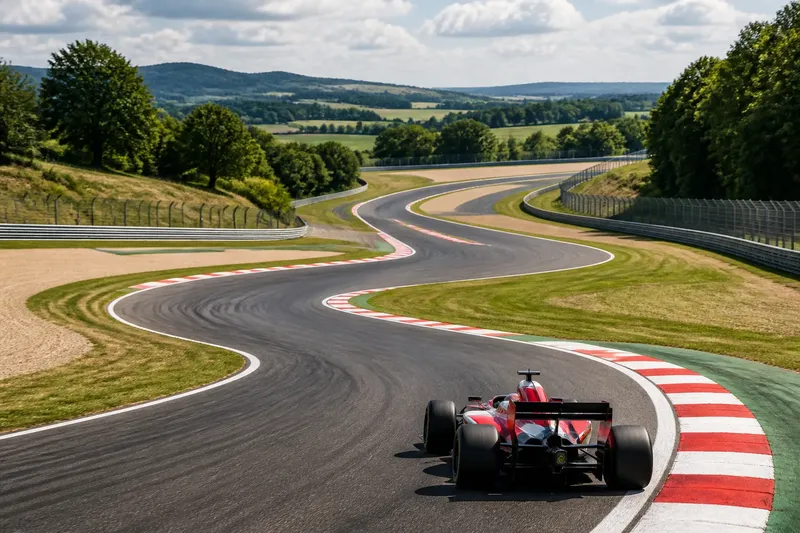
A car approaches a right-hand bend, moves towards the outside edge, turns in, then drifts out again. At the next right-hander, the same driver stays wide for longer or aims for a later apex. To understand why a racing line changes from corner to corner, watch not just the bend but the speed at entry and the track waiting on its exit.
A racing line is the path a driver chooses through a corner. The familiar outside-inside-outside route is a useful starting point, not a rule: the best path depends on what the car can do, how the corner is shaped and what the driver needs to do next. When a line looks odd from the grandstand, a nearby constraint or a later piece of track often explains it.
The car turns in too early and reaches the apex before the corner tightens
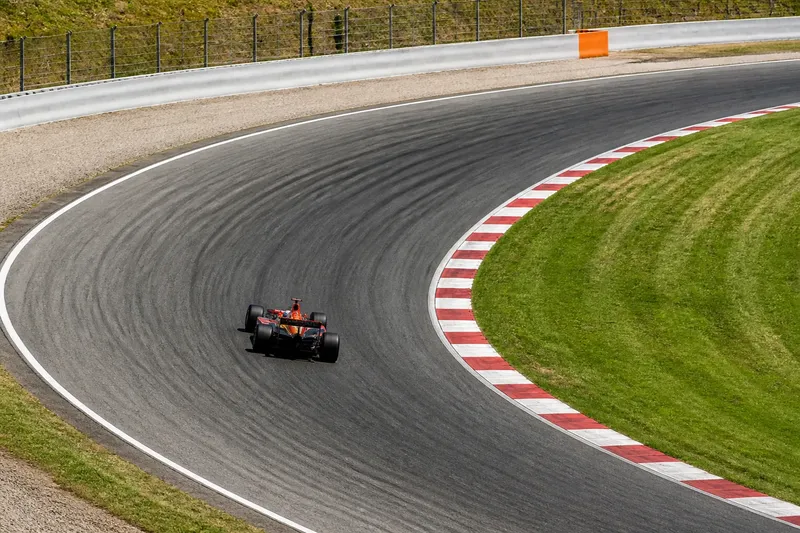
What you see: The car touches the inside kerb early, then runs out towards the outside edge while the bend continues. The driver may ease off, adjust the steering or accept a compromised exit rather than hold a smooth arc.
What usually causes it: The driver has treated a corner that tightens as if its radius stayed constant. The apex—the point where the car comes closest to the inside of the bend—arrives before the tightest part. Reaching it early can leave too little road for the remaining turn.
What to watch for: Compare the car’s position at turn-in with its position at the apex. If the car reaches the inside kerb while the track still bends sharply, the driver may have committed to the turn too soon. A later apex leaves more room to keep turning and can make the exit easier to manage.
Try following the painted edge of the circuit with your eyes rather than judging the corner by its first visible curve. A bend may look open at entry but close in as it unfolds. This is one reason two corners with similar entrances can call for different turn-in points.
The car runs wide on exit despite a tidy entry
What you see: The car appears neatly positioned at turn-in and passes close to the inside, but then uses all the track on the exit or crosses the kerb. It may seem as if the driver simply turned too fast.
What usually causes it: The corner may be sharper than its approach suggests, or the driver may be carrying more entry speed than the available grip and exit space can accommodate. A car needs time and room to change direction; a tidy-looking apex does not mean the exit is already secured.
Entry speed is the speed a car carries as it arrives at the corner. It affects how much room the driver needs to slow, turn and accelerate again. The same path can be manageable at one speed and too demanding at another, so a driver may alter the line as well as the pace.
What to try as a spectator: Watch how much steering the driver adds near the apex, then notice whether the car begins to open its line smoothly. A car that keeps turning sharply or runs onto the outer edge may be using a line that asks too much of the available grip. Do not assume that touching the kerb is always the objective; the driver may leave space to keep the car settled.
The exit looks compromised because the next straight matters more
What you see: A driver stays wide on entry, turns later than expected and approaches the inside of the corner after the apparent midpoint. The car then straightens earlier and accelerates towards a long straight.
What usually causes it: The driver is prioritising the exit. A later apex can reduce the time spent turning before the car is pointed down the straight, making it easier to apply power without asking the tyres to handle heavy acceleration and sharp cornering at once.
That choice may make the first part of the corner look slower. The driver is accepting a less direct route into the bend to reach a more useful position afterwards. Think of opening a door: stepping back before pushing it can give you a clearer path through, even though it adds a small movement at the start.
To read the decision, look beyond the corner exit. If a straight follows, the driver may care more about leaving the bend with the car aligned and ready to accelerate than about reaching the apex as early as possible. If another corner follows quickly, that same exit may need to leave the car in position for the next turn instead.
The car changes line between two linked corners
What you see: A driver takes a wide or unusually slow path through the first bend, then arrives at the second with a cleaner angle. Alternatively, the car clips the first apex but seems poorly placed for the next corner.
What usually causes it: The corners form a sequence. The driver may sacrifice the first bend to prepare for the second, where a better exit or track position matters more. Treating each corner as a separate puzzle can make the chosen line seem needlessly awkward.
Imagine a fictional circuit with a left-hand bend immediately followed by a tighter right-hander. A driver stays towards the left side through the first bend, gives up a direct route to its apex, and arrives positioned to turn right. The expected visible result is a calmer change of direction and a more direct path out of the second corner; the first bend alone would not explain the choice.
For a spectator, trace the car’s path across the whole sequence. Note where the driver places the car after the first apex, not only where it touches the kerb. The useful question is often whether the first turn sets up a stronger position for the next one.
The chosen line shifts from lap to lap
What you see: The driver turns in from a different place, avoids a kerb used earlier or leaves a wider gap to another car. The change may look like inconsistency, even when the corner itself appears unchanged.
What usually causes it: A racing line is a choice made in changing circumstances. The driver may be defending against a rival, attempting an overtake, responding to a car ahead or avoiding a patch of reduced grip. Traffic can block the usual approach, while a different position may offer a clearer route through.
Compare the surrounding situation before judging the line. Is another car alongside? Has the driver moved to protect the inside? Is the car approaching a different part of the track because of a previous turn? These details help distinguish a tactical path from an error, though a single view may not reveal the driver’s full reason.
Why does a driver miss the apex?
Why does a driver turn in later than expected?
A later turn-in can position the car for a tighter bend or a better exit, especially when the next section rewards early acceleration. The visible apex may also be less important than keeping the car settled through the complete corner.
Why does the car stay away from the kerb?
The kerb may be unsuitable for the car’s balance, or using it may disrupt the preferred exit path. A driver can choose a slightly wider line to preserve control and leave room for what follows.
Why does a driver use a different line while defending?
A defending driver may move towards the inside to make an overtaking route harder to use. That changes the shape of the corner, so the driver may need to accept a tighter turn or a weaker exit to hold position.
Why can’t every driver use the same ideal line?
There is no single ideal path that fits every corner and situation. Corner shape, entry speed, car behaviour, track position and the next section all influence the line a driver can choose.
Read the whole corner before judging the line
When a line looks surprising, check three things in order: the shape of the corner, the speed and position at entry, and the track beyond the exit. Then ask whether another car or a linked bend changes the driver’s options. This simple viewing habit makes it easier to separate a deliberate compromise from a line that has become difficult to hold.
The next time a driver appears to miss an obvious apex, follow the car until it is fully clear of the bend. The racing line may explain itself only after the exit: the important choice could have been where the driver needed to be next.